
How to Build a Content System Around One Video Shoot
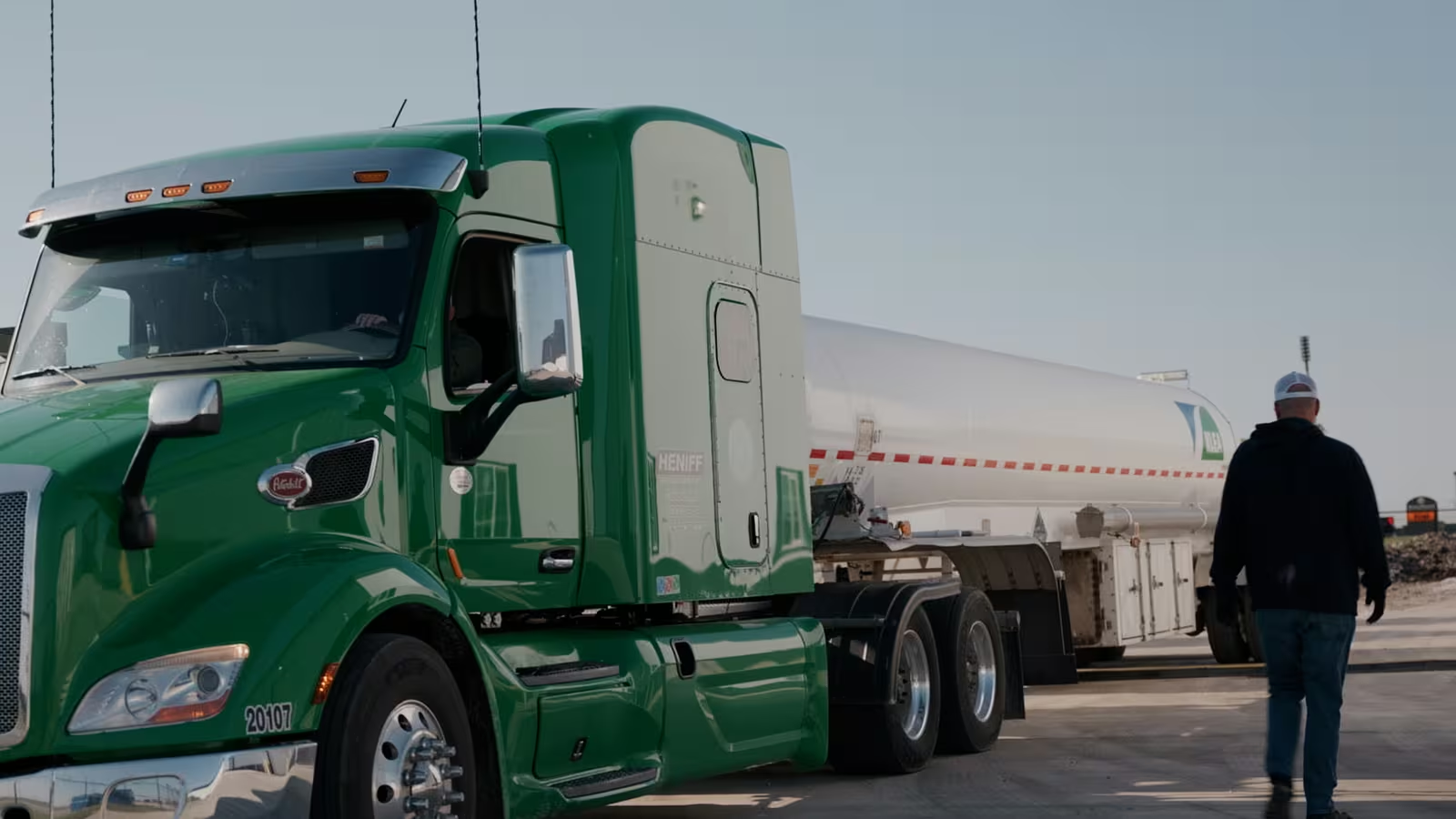
The Lenz Distributing production was planned around interviews, operations, people, process, scale, and the future ways that content could be used.
A lot of businesses treat video like a single deliverable.
They plan one company film, publish it once, and start from zero the next time they need something to share.
That is usually not a production problem. It is a planning problem.
When a shoot is planned around the business goals, audiences, and channels it needs to support, one production can create a useful library of interviews, operational footage, photographs, short-form clips, and written ideas that continue working long after the primary video is delivered.
“The camera day alone does not create a content system. The planning does.”
Phil Watson, 55 North Creative House
Start With the Business Goal, Not the Shot List
Before cameras arrive, decide what the content needs to help the business accomplish.
- Attract qualified applicants
- Explain a complex service
- Build trust with prospects
- Support a sales conversation
- Show progress or process
- Give the marketing team useful content to publish consistently
Once the goal is clear, the production plan can capture material for several formats at the same time instead of chasing unrelated clips.
Build the Shoot Around Content Pillars
Most businesses can organize a production day around a few repeatable themes:
- What the company does and why it matters
- How the work gets done
- The people behind the work
- Proof, results, and customer outcomes
- Common questions or misconceptions
These pillars keep the shoot focused while giving the final content enough variety to remain useful across multiple channels. They also make it easier to decide who should be interviewed, what work needs to be documented, and which stories deserve priority.
What This Looked Like for Lenz Distributing
When 55 North documented Lenz Distributing’s facility and operations in New Berlin, Illinois, the production was planned around more than a single polished film.
The primary story required leadership interviews, warehouse coverage, tanker transfer, cylinder filling, product handling, employee activity, facility details, and exterior and drone footage. Each category served a specific purpose.


The interviews explained the company. Operational footage showed how the work gets done. Facility visuals established scale. Product details connected the process to the brand. Footage of the team put real people behind the operation.
Together, those pieces created the main operations film and a broader visual library that could continue supporting the website, social content, sales follow-up, and future edits.
The value was not simply having more footage. The value was capturing the right footage with future uses already in mind.
See the complete production story and finished film in our Lenz Distributing operations film article.
Capture One Strong Interview, Then Break It Apart
A focused interview can become the backbone of the entire content system.
The complete conversation may support a brand film, recruiting piece, case study, or project video. Individual answers can become short videos, LinkedIn posts, website copy, sales follow-ups, blog content, internal communication, and quote graphics.
The key is asking questions that produce complete, specific answers.
Generic questions create generic content. Real examples, clear opinions, lessons learned, and stories from the work create material people are more likely to remember.
Instead of asking, “What makes your company different?” ask someone to explain a real situation where the company’s process made a difference.

Collect Visual Proof While the Team Is Working
Supporting footage should do more than make the edit look polished. It should prove the claims being made in the interview.
If the message is about craftsmanship, show the details. If it is about scale, show the operation. If it is about culture, show real interaction. If it is about process, document the process clearly enough that a viewer can understand what is happening without narration.
This matters especially for technical, industrial, construction, manufacturing, professional, and B2B services. A prospect may not fully understand the work from a written description alone. Video can make the process tangible, credible, and easier to explain.


Plan the Deliverables Before Production
A single production day might reasonably create:
- One primary brand, recruiting, operations, or project film
- Three to six short vertical videos
- A library of clean B-roll for future edits
- Still frames or on-set photos for LinkedIn and website use
- Written quotes and ideas pulled from interviews
- A blog post or case study built around the same core story
- Sales content that can be sent directly to prospects
Not every shoot needs every deliverable. The point is to make those decisions before production, when they can influence interview questions, framing, orientation, coverage, and time on site.
If vertical content is part of the plan, it should be considered while filming. If the footage will support recruiting, the production should document employees, work environments, and moments that reinforce that message. If the content needs to support sales, the interview should address the questions prospects actually ask.
Map Each Business Need to a Piece of Content
A simple content map keeps the production tied to business priorities:
- Build trust: leadership perspective and proof of process for a company film
- Recruit employees: team stories and workplace footage for recruiting clips
- Explain services: clear interview answers and process visuals for service videos
- Stay visible: short insights, stills, and behind-the-scenes content for LinkedIn
- Support sales: outcomes and credibility for case studies and follow-up
- Improve the website: focused messaging and visual proof for service pages and articles
This prevents the production from becoming a collection of good-looking footage with no clear job to do.
Distribute the Idea, Not the Exact Same Post
Repurposing does not mean copying and pasting identical content everywhere.
The core idea stays consistent, but each platform should do a different job.
- The website holds the complete article, film, or case study
- LinkedIn introduces the business insight and starts a conversation
- YouTube gives the idea a searchable video explanation
- Short-form clips earn attention and point people toward the deeper resource
- Sales teams use the most relevant piece in direct follow-up
AI-assisted tools can help search transcripts, organize themes, tag footage, and turn strong ideas into draft posts. They cannot replace the planning that determines what gets captured in the first place. No software can create the interview answer, operational moment, or visual proof that the production missed.
Organize the Library So It Can Be Reused
Content loses value quickly when nobody can find it.
After production, footage and finished assets should be organized by useful categories such as interviews, B-roll, vertical clips, finished videos, photos, quotes, recruiting, sales, social media, and evergreen content.
Clear file names and basic notes about who appears, what is being discussed, and where footage was captured can save hours later.
A strong content library should become more valuable over time, not disappear onto a hard drive after the first edit is delivered.
The Real Value Is Consistency
Businesses do not need to film every week to stay visible.
They need to capture the right material, organize it well, and release it with a plan.
That changes video from an occasional expense into a working library of proof, explanation, and trust.
The goal is not simply to make more content. The goal is to get more useful content from the time, access, people, and budget already being invested in production.
A good production day should not leave a business with one video. It should leave them with a resource they can continue using.

Need more from your next production day?
55 North plans video production around the stories, formats, and channels your business will actually use after the shoot.
Request a Consult Explore Corporate VideoExplore our corporate video production services, review the Lenz Distributing production story, or browse more 55 North work.